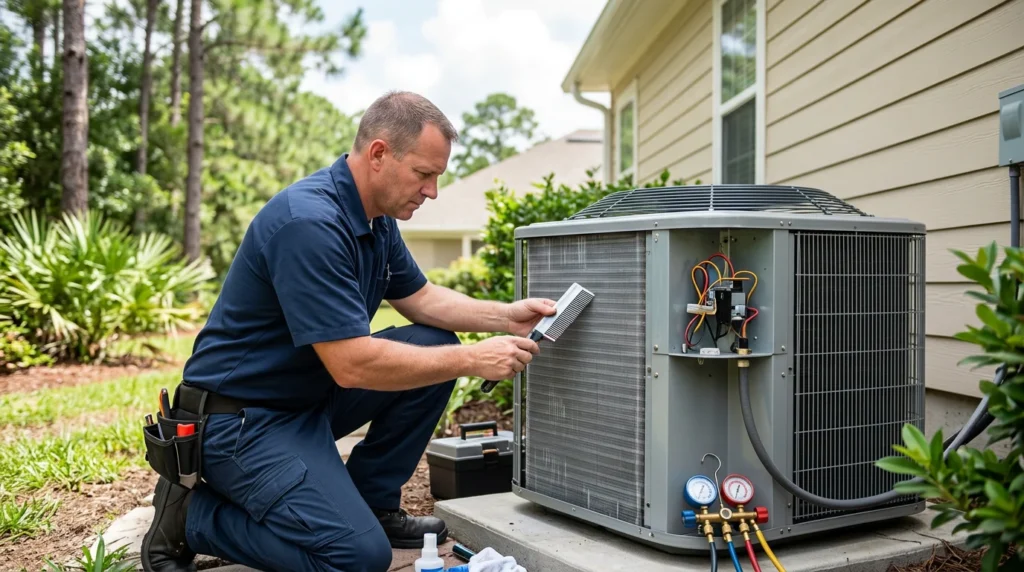
Quick answer: Most homes in Walton County do well with air conditioning maintenance once a year, ideally in spring before heavy cooling season. If you run your system hard, have pets, allergies, or an older unit, a second check in fall can prevent mid-summer breakdowns. Regular maintenance focuses on airflow, refrigerant performance, electrical safety, and drainage—issues that commonly cause weak cooling, high bills, and water leaks.
A Practical Maintenance Schedule for Walton County Homes
Plan on one professional tune-up each year, timed before the first long stretch of hot weather. That visit should catch the common early-season problems—dirty coils, weak capacitors, clogged drains, and low airflow—before they turn into a no-cool call on a weekend.
Add a second check if your system is older, you have multiple pets, you notice dust buildup quickly, or your home has humidity trouble. Many homeowners also choose a fall visit to clean up wear from summer and make sure the system is ready for shoulder-season operation. If you’re comparing options locally, air conditioning maintenance Walton County services usually bundle the same core tasks: cleaning, testing, and verifying safe operation.
Between professional visits, change or wash filters on a steady cadence. A typical range is every 1–3 months depending on filter type and how fast it loads up. If the filter bows inward, looks gray, or you’re seeing reduced airflow at vents, don’t wait for the calendar.
What a Good AC Maintenance Visit Should Include
A solid maintenance appointment is more than a quick glance at the thermostat. The tech should verify airflow, temperature split across the coil, and overall system operation, then inspect the components that most often fail under heat stress.
Expect cleaning and inspection of the indoor blower area (as accessible), outdoor condenser coil condition, electrical connections, contactor and capacitor health, refrigerant performance checks, and a drain line and pan inspection. Drain issues are a common source of ceiling stains and emergency shutoffs in humid weather, so clearing and testing the condensate drain matters.
They should also check for duct or return-air problems that mimic equipment failure: blocked returns, crushed flex duct, or supply registers closed in multiple rooms. Those airflow restrictions can freeze the coil, cause short cycling, and make the system louder.
Signs You Shouldn’t Wait for Your Next Scheduled Tune-Up
Schedule service sooner if you notice warm air, weak airflow, short cycling (turning on and off frequently), new rattling or buzzing, musty odors at startup, or water around the indoor unit. A sudden jump in electric bills can also signal a dirty coil, failing motor, or refrigerant-related problem.
Ice on the refrigerant line or indoor coil is a “stop and call” situation. Turn the system off to prevent compressor damage, switch the fan to “On” to help thaw if advised, and check the filter. Low airflow and refrigerant issues are the most common causes, and running it frozen can turn a manageable repair into a major one.
If your thermostat seems inaccurate, rooms cool unevenly, or humidity feels high even at a lower temperature setting, ask for a full system evaluation. Comfort problems are often tied to airflow, duct leakage, or an oversized/undersized system—not just the outdoor unit.
How to Get the Most Out of Maintenance Between Visits
Keep the outdoor unit clear. A good rule is about 18–24 inches of breathing room around the condenser and no shrubs crowding the coil. Hose off loose debris gently (power washers can bend fins) and keep dryer vents or lawn clippings from blasting into the unit.
Inside, use the right filter style for your system. Very high-MERV filters can reduce airflow in some setups, so if you’ve had airflow issues, ask what filter range fits your equipment and ductwork. Also keep supply vents open and returns unblocked by furniture or rugs.
If you want help setting a schedule and getting the system checked the right way, Billy Butler HVAC can handle routine maintenance and catch small issues before they become breakdowns.