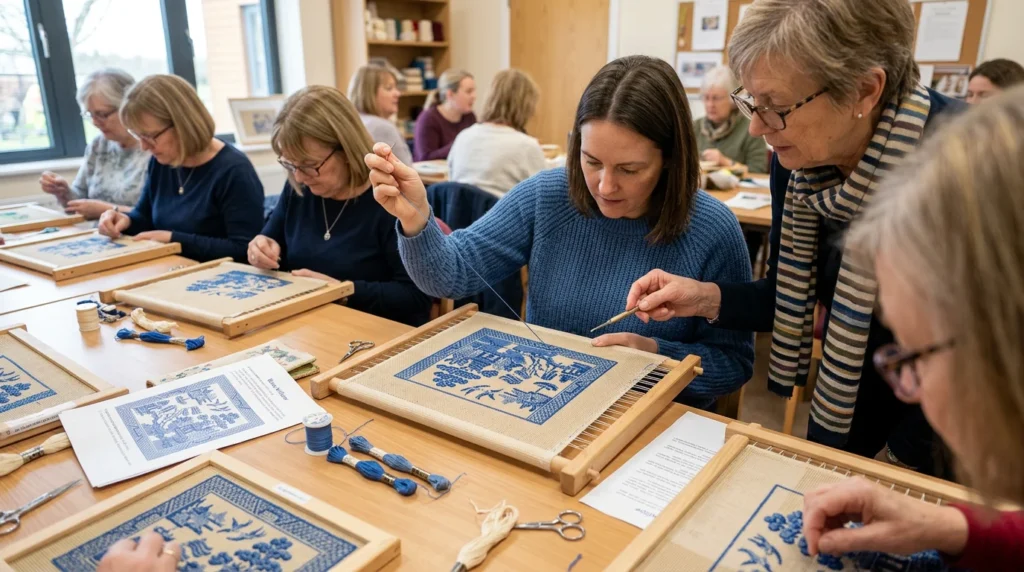
Quick answer: A decorative stitch class at UGA generally focuses on learning patterned stitches you can use for backgrounds, borders, and clothing areas on needlepoint canvases. Expect demonstrations, guided practice, and coaching on thread choice, stitch direction, and tension so your work stays even and your canvas stays square. Specific details like class length, location, and registration come from UGA’s official course listing or syllabus.
What the Class Usually Covers
A decorative stitch class is about building a “toolbox” of stitches you can use on canvases with open areas, backgrounds, borders, and clothing. You’ll usually learn how to read stitch diagrams, place stitches so they travel neatly across the canvas, and choose stitch size so it fits the painted area without fighting the design. Expect to practice several families of stitches—think straight, diagonal, and woven patterns—so you can recognize what will behave well in different spaces.
Many classes use a sampler so everyone can focus on technique; others are bring-your-own-canvas so you can apply stitches directly to your project. If you want a simple supplies checklist to compare against what you already own, Decorative Stitch Class UGA Blue Willow Needlepoint can be used that way without assuming it matches UGA’s exact requirements.
Good instruction also includes “why” a stitch works: how compensation changes on curves, why some patterns pull the canvas more than others, and how to keep corners crisp. Those details are what make decorative stitches look intentional rather than busy.
UGA Details vs General Class Norms
General expectations (true for many decorative stitch classes): you’ll learn stitch families, tension control, and how to place patterns cleanly; you may work on a sampler or on your own canvas; and you’ll likely get some guidance on threads and needle sizing. Those basics don’t change much from one instructor to another.
UGA-specific details need to come from UGA’s official listing or syllabus because they can change by semester. Check the UGA posting for the exact duration (single workshop vs multi-week series), the meeting location (campus building/room), how registration works, what materials are required, and whether the format is sampler-based or bring-your-own-canvas. If the listing is brief, ask for the syllabus or a supply list before you commit.
What Happens in the First Session (Common Format)
Unless the UGA syllabus says otherwise, a common first-session flow looks like this: a short demo of 1–3 stitches (how to start, travel, and end), then guided practice while the instructor corrects tension and direction, then a wrap-up on where each stitch works best (background vs border vs small detail).
Many instructors also assign light “homework” after session one: repeat the stitches for a larger area, label what you did (thread, needle size, stitch name), and note any issues like canvas pull or gaps. Treat this as a typical format, not a promise of how UGA will run it, and verify the plan with the UGA course description or instructor notes.
Before You Register
Use this checklist to decide if the class is a good fit and to avoid surprises:
Skill prerequisites: You should be able to thread a needle, start/stop threads neatly, and keep basic stitches consistent. If you don’t know basketweave or aren’t confident about tension, ask if the class is friendly to beginners or if a fundamentals class is recommended first.
Questions to ask the instructor: Is it sampler or bring-your-own-canvas? What canvas count(s) work best? Are specific threads required or can you use what you have? Will the class cover compensation on curves/diagonals? How much at-home practice is expected between sessions?
If you don’t have a frame/stand: Ask whether a stretcher bar frame is required or optional. Many stitchers can start with hand-held stitching for small pieces, but decorative patterns often look cleaner on a frame because it helps keep tension even and reduces canvas distortion.
If you want help choosing a starter frame setup, matching needle sizes to canvas, or sorting threads before class so you show up ready to practice, Blue Willow Needlepoint is a practical place to get help.